Intro: Why this gadget matters now
Travel is back. People want fast help with language. A pocket AI translator is small. It works offline and online. It turns speech into clear text. Then it speaks the translation. Thus, it removes stress. Moreover, it helps in shops, taxis, and hotels.
What is a pocket AI translator?
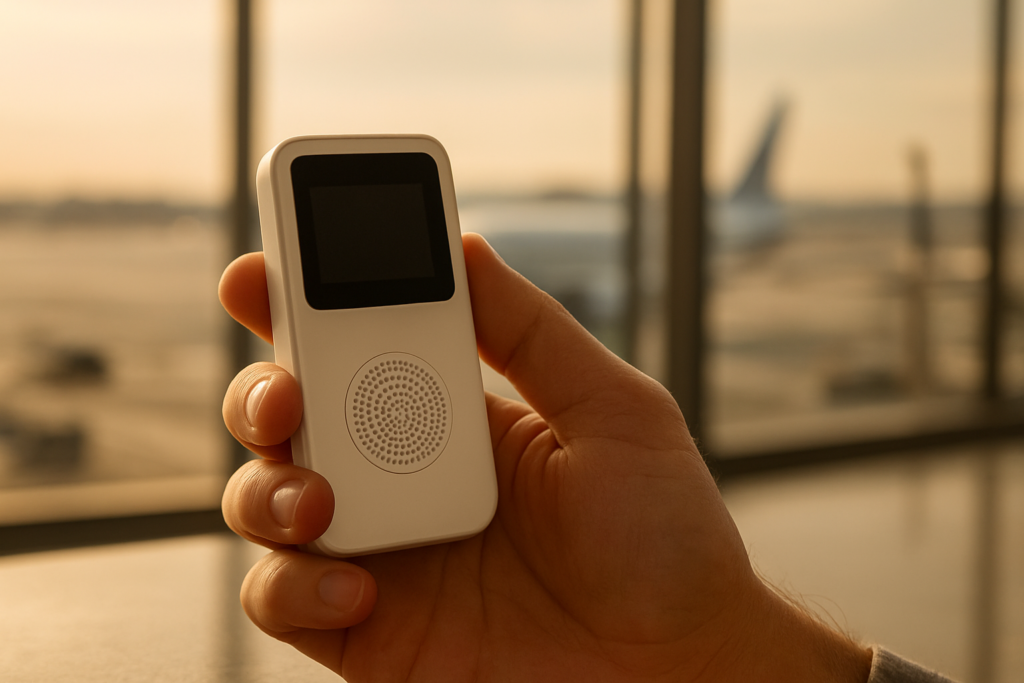
It is a small device. It listens to your voice. Then it uses AI to translate. Also, it can scan and translate text. Most models support many languages. They are simple to use. You press a button and speak. Then you hear the result.
Key features to look for
- Fast speech recognition. It should pick words quickly.
- Accurate translations. Look for natural phrasing.
- Long battery life. At least a full travel day.
- Offline mode. Useful if you lose internet.
- Compact size. Fits in a pocket or small bag.
- Clear speaker and mic. For noisy places.
- Multiple language support. Commonly 40+ languages.
How it works — simple steps
First, turn on the device. Then, pick a language pair. Press the talk button. Speak in your language. The device processes your voice. Next, it shows text on screen. Finally, it speaks the translated phrase. You can also type or scan text. That is all.
Top benefits
- Save time. You avoid long phrasebooks.
- Reduce errors. AI handles grammar and tone.
- Gain confidence. Talk to locals easily.
- Stay safe. Ask for help in emergencies.
- Work offline. Many devices store language packs.
Possible downsides
No gadget is perfect. Keep this in mind.
- Not always 100% accurate. Slang can confuse it.
- Noise can lower accuracy. Busy streets are hard.
- Battery limits. You may need a power bank.
- Some models cost more than a phone app.
Buying tips
First, check real reviews. Then, compare languages. Also, test battery life. If you travel often, get offline packs. For business, choose faster processors. Finally, consider warranty and support.
- Read hands-on reviews. They show real use.
- Choose a simple interface if you are not techy.
- Buy from a brand with good updates.
- Check return policy in case it fails in your language.
Compare with phone apps
Phone apps are handy. They can be cheap or free. Yet, dedicated devices have pros. They often listen better. Also, they have longer calls with low battery drain. Moreover, they focus only on translation. Therefore, they may be more reliable for travel.
Best use cases
- Tourists visiting many countries.
- Solo travelers who need quick help.
- Business trips with fast meetings.
- Families traveling with kids.
Quick tips for best results
- Speak clearly and slowly.
- Face the device mic directly.
- Avoid loud backgrounds when possible.
- Use short sentences for tricky phrases.
- Carry a small charger or power bank.
FAQ
Do these devices work offline?
Yes. Many models let you download language packs. Offline mode is slower, but still useful.
Can they translate slang?
Not always. Slang and idioms may be wrong. However, models improve often with updates.
Are they better than human interpreters?
They are fast and cheap. Yet, for legal or medical talks, a human is still best.
Final thoughts
Pocket AI translators are a smart travel tool. They make short trips easier. Also, they cut stress for new places. If you travel often, this gadget is worth a look. Try one on a short trip. Then, you will see the difference.
Call to action
Want a quick pick? Compare top models that offer offline packs, good battery life, and fast speech recognition. Read user reviews. Also, test the device if you can. Travel more. Speak more. Enjoy your trip.