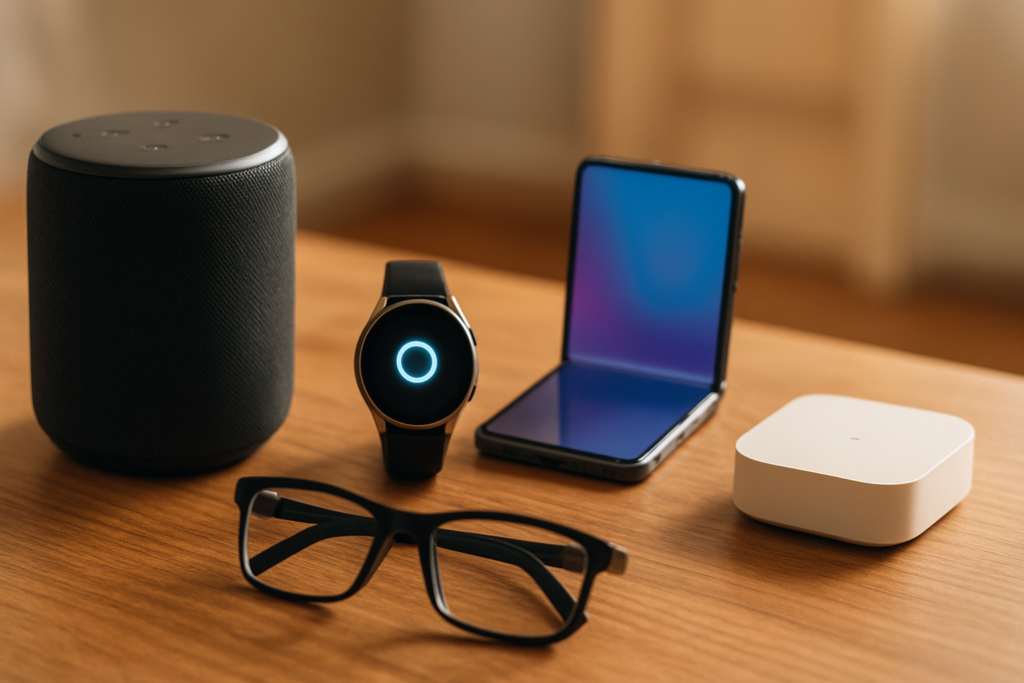
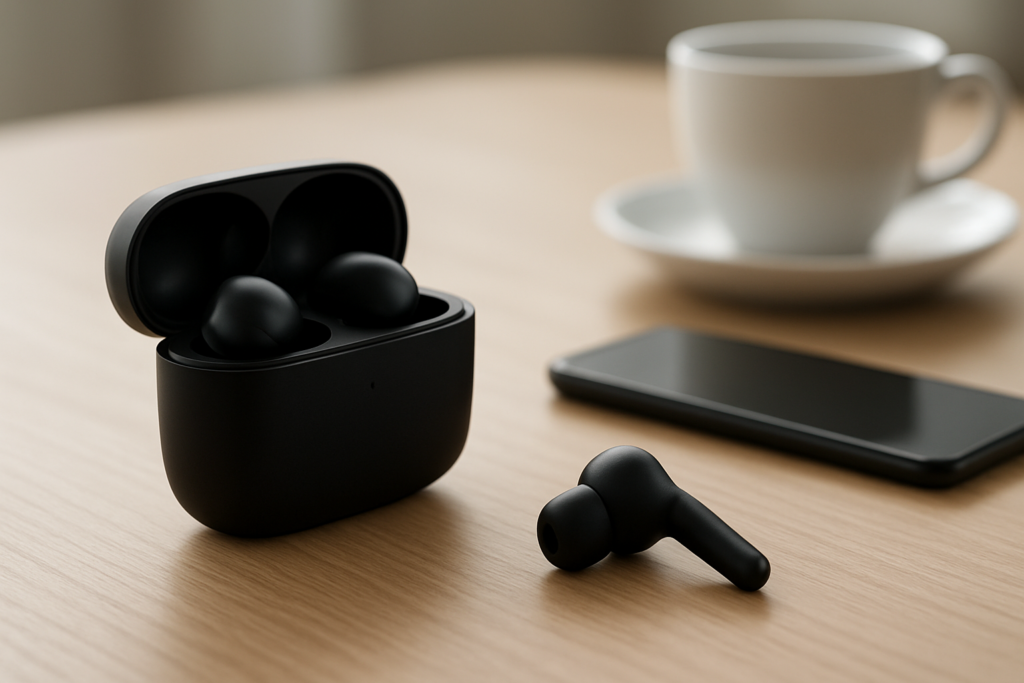
Why AI Noise Control Is the Gadget to Watch in 2026
Smart earbuds moved beyond Bluetooth years ago. The latest trend combines miniaturized hardware with on-device AI to adapt noise reduction, voice clarity, and battery use in real time. For commuters, remote workers, and casual listeners, AI noise control means better calls, consistent playback, and fewer manual adjustments.
What Makes AI Noise Control Different?
AI noise control uses machine learning to distinguish speech, ambient noise, and music. It can lower wind noise during calls, preserve vocal frequencies, or boost conversational clarity in busy places—automatically.
Key Features to Look For
- On-device AI processing for privacy and lower latency.
- Adaptive active noise cancellation (ANC) with multiple modes.
- Long battery life plus quick-charge support.
- Low-latency codecs like aptX Adaptive or LC3plus for gaming and video.
- Comfortable fit with multiple ear tips and a secure design.
- Durable build with IPX water/sweat resistance.
Battery and Charging: What to Expect
Modern compact earbuds often deliver 6-10 hours per charge with ANC off, and 4-7 hours with ANC active. Look for a case that adds at least 20-30 hours total. Fast charging that gives an hour of playback in 10-15 minutes is ideal for busy days.
Sound Quality and Codecs
Balanced drivers and proper tuning still matter. AI can optimize equalization for different environments, but native hardware quality determines baseline sound. Prioritize models supporting higher-efficiency codecs for better wireless fidelity.
Comfort, Fit, and Call Performance
Comfort affects daily use. Choose buds with multiple ear tip sizes and secure stems or winged tips for active use. For calls, seek multi-microphone setups and AI voice isolation to reduce background chatter.
Top Compact Smart Earbuds to Consider in 2026
- Model A — Best for commute: Excellent adaptive ANC, 36-hour case life, AI wind suppression for crystal-clear calls.
- Model B — Best battery value: Up to 10 hours per charge with efficient codecs and quick-charge features.
- Model C — Best for audio enthusiasts: High-resolution support, customizable EQ via app, and precise spatial sound modes.
- Model D — Best compact design: Ultra-small stems, secure fit, and intuitive touch controls with hands-free voice assistant.
Practical Buying Tips
- Test fit where possible; comfort cannot be judged by specs alone.
- Prioritize on-device AI for privacy-sensitive users.
- Compare ANC performance in real-world settings like trains, cafes, and windy streets.
- Check app support and firmware update history—regular updates extend features and fix issues.
- Balance feature needs with price; a mid-range AI-enabled pair can outperform older flagship models.
Quick FAQ
Do AI earbuds drain battery faster?
Not necessarily. Efficient on-device AI chips can run tasks with minimal power overhead. Look for manufacturers advertising power-efficient AI engines.
Is on-device processing better than cloud?
On-device keeps latency low and preserves privacy. Cloud processing can offer more computational power but may introduce delay and data concerns.
Will AI replace manual ANC controls?
AI aims to reduce manual tweaks by predicting user needs, but manual modes remain useful for fine-tuning and personal preference.
Final Takeaway
Compact smart earbuds with AI noise control are one of the most practical gadget upgrades this year. They combine superior call clarity, adaptive listening, and long battery life in pocketable form. For most users, an AI-enabled mid-range model will provide the best balance of performance, price, and future-proofing.
Ready to buy? Prioritize fit, battery, codec support, and on-device AI privacy before checking price and warranty. Try a quick listening test to confirm comfort and sound signature.